
Criminal Court Records in St. Joseph County
A criminal court record is the case file a court opens the moment charges are filed against a defendant. It is more than a single charge sheet. The file gathers the complaint, the warrant, bond terms, arraignment entries, motions, plea papers, and the final sentence in one place. In St. Joseph County, the court that handled the case keeps the official record. The County Clerk and Register of Deeds, Gina Everson, serves as clerk of the 45th Circuit Court, so felony case files run through that office. The 3B District Court keeps its own counter and case index for misdemeanors and the early stages of every felony.
Two state trial courts share criminal work here. All criminal cases begin in the 3B District Court, which the county calls the court where every criminal matter is initiated. Misdemeanors can stay in District Court through plea, trial, sentencing, probation, and payment. Felonies start there too, with the warrant, arraignment, bond, and preliminary examination, then move up to the 45th Circuit Court after a bindover. Knowing that split tells you which court holds the file you want.
The county describes how adult cases open on its 3B District Court Criminal Division page, which covers age 17-and-older jurisdiction and the felony arraignment path.
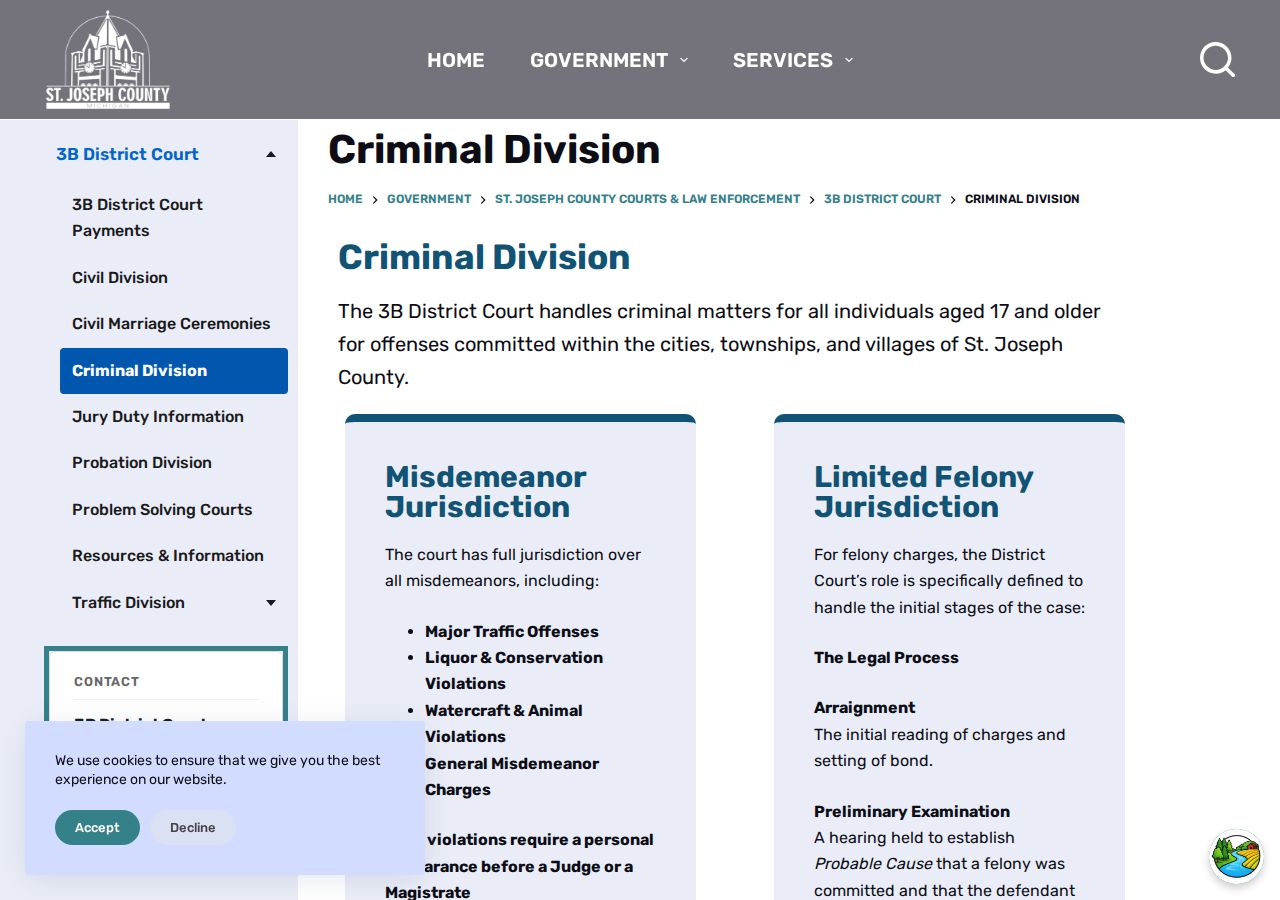
That division page confirms the District Court hears misdemeanor charges in full and handles the felony arraignment and preliminary examination before a case can be bound over. Every criminal court record in the county traces back to one of these two trial courts.
How to Search St. Joseph County Criminal Court Records
Criminal case files sit in two separate search systems, so most people check both. The statewide MiCOURT case search covers participating trial courts and is the main route for 45th Circuit Court felony cases. The county links a direct 45th Circuit Court search path for that court. District Court matters are best found through the local grid.
- Open the MiCOURT case search and pick the 45th Circuit Court, or use the local 3B District Court case grid for misdemeanors and felony starts.
- Search by the defendant's last and first name, or enter a full case number if you have one.
- Narrow the results by court, case type, case status, and filing or offense date.
- Open the case to read the register of actions, the charges, and any disposition or sentence entered.
- Request a certified copy from the clerk's counter when you need an official document for legal use.
The 3B District Court case grid is a broad public index with column filters for last name, first name, birth year, case number, and status. For scheduled hearings, the 3B District Court calendar lists arraignments, pretrials, and sentencing dates by day.
Online viewing has a firm limit. A county Clean Slate notice, effective April 11, 2023, states that online criminal viewing reflects cases from 2017 to the present, and that the accuracy of older cases must be verified manually with the court. The public viewing terminal for criminal cases is currently unavailable, so older files often mean a call or a counter visit.
Note: Michigan courts do not post document images online under MCR 8.119, so a search confirms the case and docket while copies of pleadings need a request.
Stages of a St. Joseph County Criminal Case
A criminal case moves through set stages, and each one adds new entries to the record. The St. Joseph County Prosecuting Attorney's Office explains the path on its progression of criminal cases page, which starts with a warrant request and a review of police reports, witness statements, and prior history before any charge is authorized.
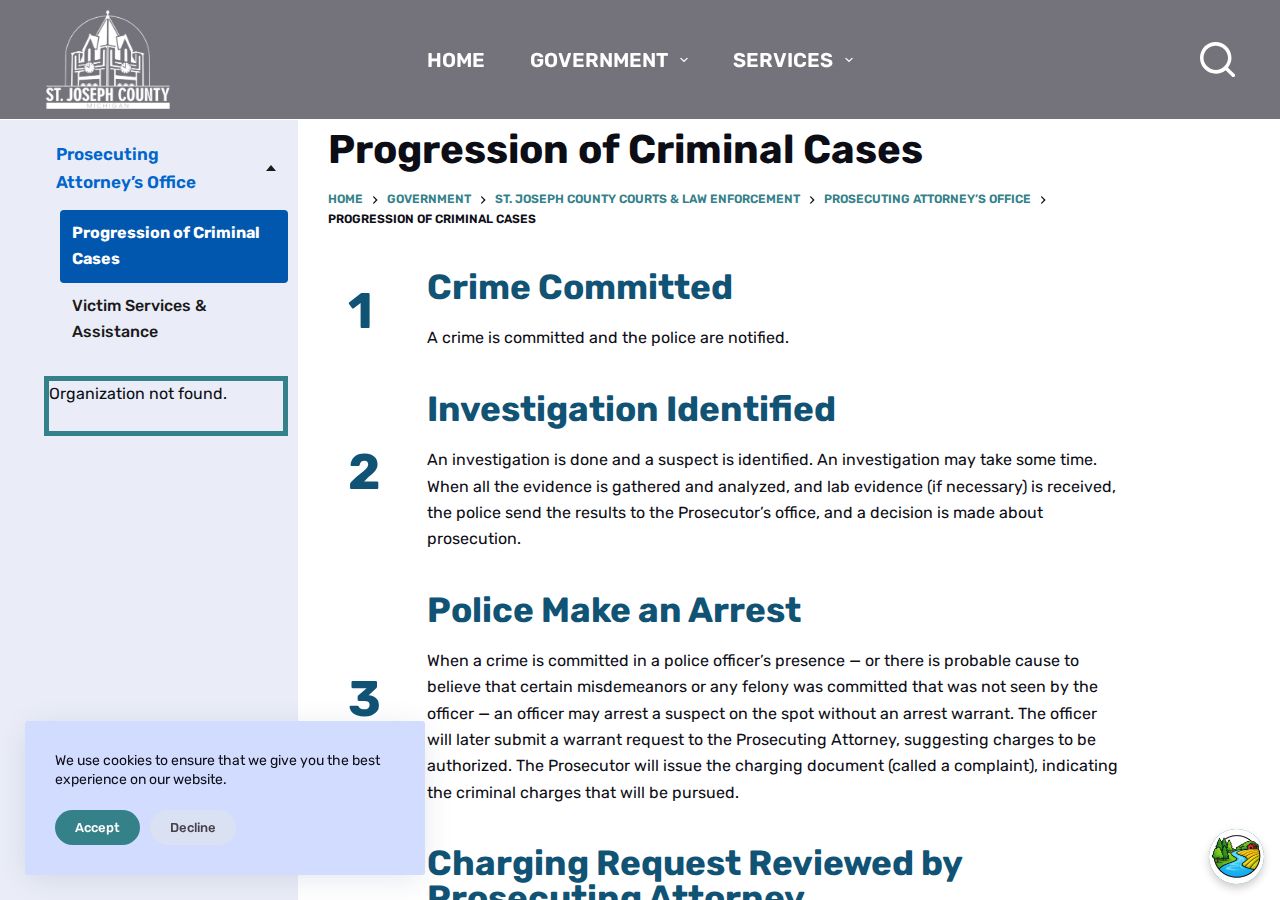
Once a charge is authorized, a complaint is filed in District Court and a magistrate reviews the warrant and the probable-cause affidavit. From there the case follows a clear order, with felony matters passing through a preliminary examination before a judge decides whether to bind the case over to Circuit Court.
Case flow: Charges Filed › Arraignment › Preliminary Exam / Bindover › Plea or Trial › Disposition › Sentencing
- Arraignment
- The defendant hears the charges in District Court and the court sets bond or release conditions. A plea may be entered at this first hearing.
- Preliminary Exam / Bindover
- For felonies, a District Court judge weighs the evidence for probable cause. If it is found or waived, the case is bound over to the 45th Circuit Court.
- Plea or Trial
- Most cases end in a plea, but a defendant may take the matter to a bench or jury trial where guilt is decided beyond a reasonable doubt.
- Sentencing
- After a conviction, the judge imposes the sentence. Jail or prison time, probation, fines, costs, and restitution are recorded in the file.
What a St. Joseph County Criminal Court Record Shows
The full case file holds far more than a name and a charge. Michigan Court Rule 1.109 defines a court record broadly as the recorded information the court creates or receives in a case, from the complaint and warrant to motions, orders, and the register of actions. Public online views often show the register of actions rather than the documents themselves. The table below maps the core fields you will read in a criminal file.
| Field | What It Shows |
|---|---|
| Case Number | The unique court identifier that ties every filing, hearing, and order to one case. |
| Defendant | The person charged, listed by name with a birth year in some District Court grid views. |
| Charges | The offenses as filed by the prosecutor, with the statute cited and the severity level. |
| Plea | The defendant's formal answer, such as guilty, not guilty, or no contest. |
| Disposition | The outcome of each charge, from dismissal or acquittal to a plea or verdict of guilty. |
| Sentence | The punishment ordered after a conviction, including jail, probation, fines, and restitution. |
A closer look at the charges as filed, amended, or dropped lives on the St. Joseph County arrest records and court charges page. The case file records the result of each charge, not just the accusation.
Charges vs. Convictions
A charge and a conviction are not the same thing, and the record makes that difference plain. A charge is an accusation the prosecutor files after a probable-cause review. A conviction is a finding of guilt, reached by a plea or by a verdict beyond a reasonable doubt. A criminal court record can show charges that were later dropped, dismissed, reduced, or that ended in an acquittal at trial.
| Charge | Conviction | |
|---|---|---|
| Stage | Accusation as filed | Verdict or plea of guilt |
| Burden of Proof | Probable cause | Beyond a reasonable doubt |
| Can Change | Amended, reduced, or dropped | Final unless appealed |
| Public Record | Yes | Yes |
Reading a record correctly means checking the disposition next to each charge, not just the charge itself. A long list of charges may end in a single conviction or in none at all.
Reading St. Joseph County Dispositions and Sentences
The disposition is the line that tells you how a charge ended. Common Michigan entries include guilty, not guilty, dismissed, and no contest, which is a plea that accepts the penalty without admitting fault. A felony may show a bindover to Circuit Court in the District Court file, then a fresh disposition once the higher court finishes the case. Some cases carry a deferred or delayed status, where a plea is held back and the charge may be dismissed after the defendant meets conditions.
The sentence follows a conviction and spells out the terms. It can list a jail term served locally, a prison term under state custody, probation with supervision, and money owed as fines, court costs, or restitution to a victim. Probation terms and payment schedules stay in the file so the court can track compliance.
Note: sentence terms and disposition codes vary by charge, so read the entry beside each count rather than assuming one outcome covers the whole case.
Sealed vs. Set Aside Records
Michigan uses the term set aside for what many states call expungement. Setting aside a conviction removes it from public view and treats it, for most purposes, as if it never happened. A sealed record is hidden from ordinary public access by a court order or a statute, yet it still exists in the file. The reference below explains how each works in a St. Joseph County criminal file.
The state set-aside law appears at MCL 780.621, which frames who qualifies and is a main legal source behind Michigan's Clean Slate program.
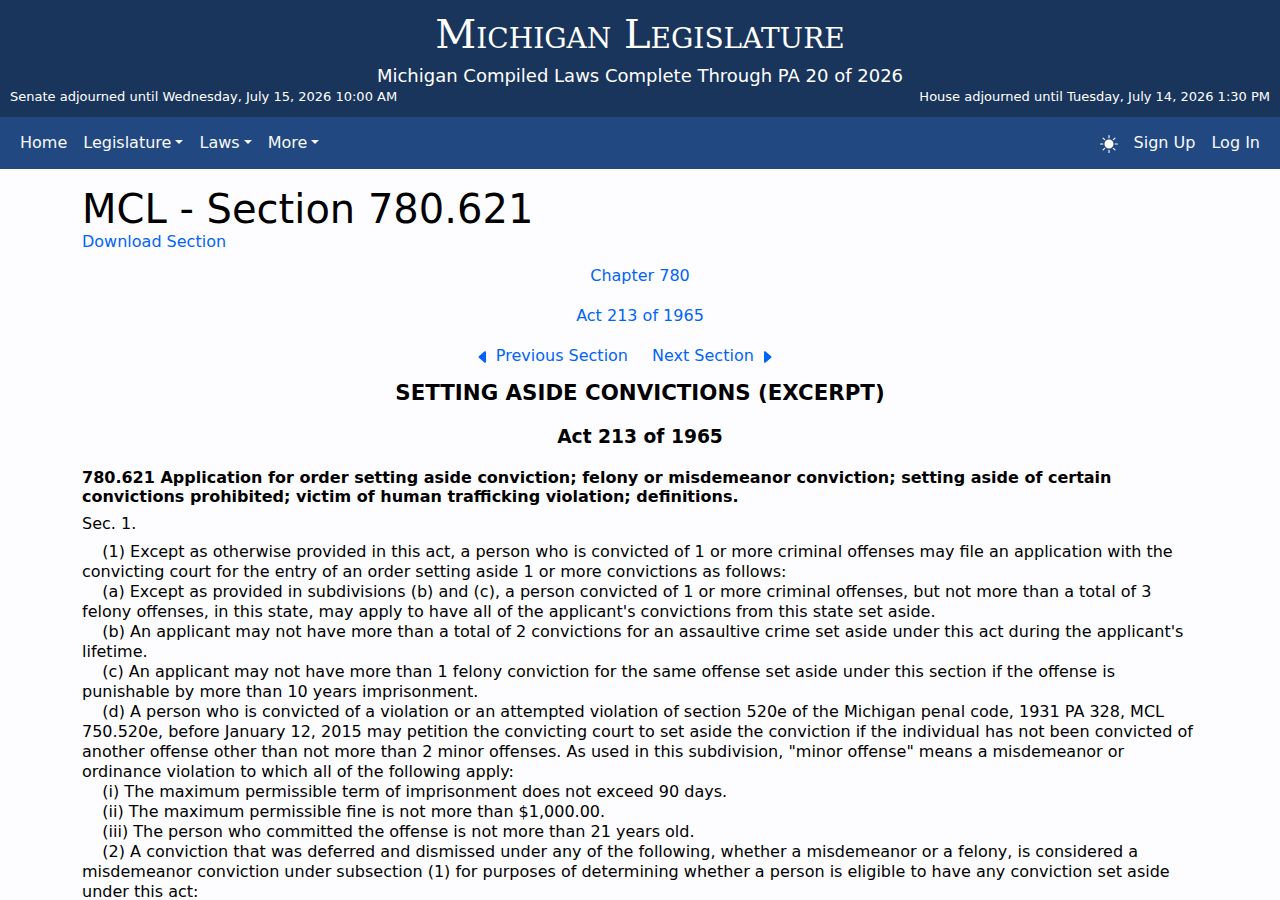
Clean Slate can clear qualifying convictions automatically, which is one reason the county's online criminal viewing reflects only 2017 to the present. Older or set-aside records may not appear in an ordinary public search.
| Sealed | Set Aside | |
|---|---|---|
| Visibility | Hidden from public access | Removed from public view, treated as if it never occurred |
| Law Enforcement | Limited access remains | Retained for limited law-enforcement and court use |
| Eligibility | By court order or statute for set case types | Set by MCL 780.621; many misdemeanors and some felonies after a waiting period, some automatic under Clean Slate |
Public Access to St. Joseph County Criminal Records
Michigan treats court proceedings as public by default, and criminal case files follow that rule unless a statute or court order limits them. Court records are handled under the Michigan Court Rules rather than the state Freedom of Information Act, because the judiciary is exempt from FOIA. That means the path to a criminal file runs through the court counter and copy process, not a FOIA request. Full case files and certified copies come from the County Clerk 45th Circuit Court Division for felonies and from the 3B District Court counter for misdemeanors. Broader court holdings and copy fees are described on the county court records page.
Key Statutes:
Michigan MCL 600.1420 - court sittings in Michigan are public except as otherwise provided by law.
Michigan MCR 8.119 - governs custody and public access to court records, and does not put every document image online.
Federal criminal cases are separate and never appear in the county or MiCOURT systems. St. Joseph County sits in the U.S. District Court for the Western District of Michigan, listed in its Southern Division, as the court confirms on its counties served page.
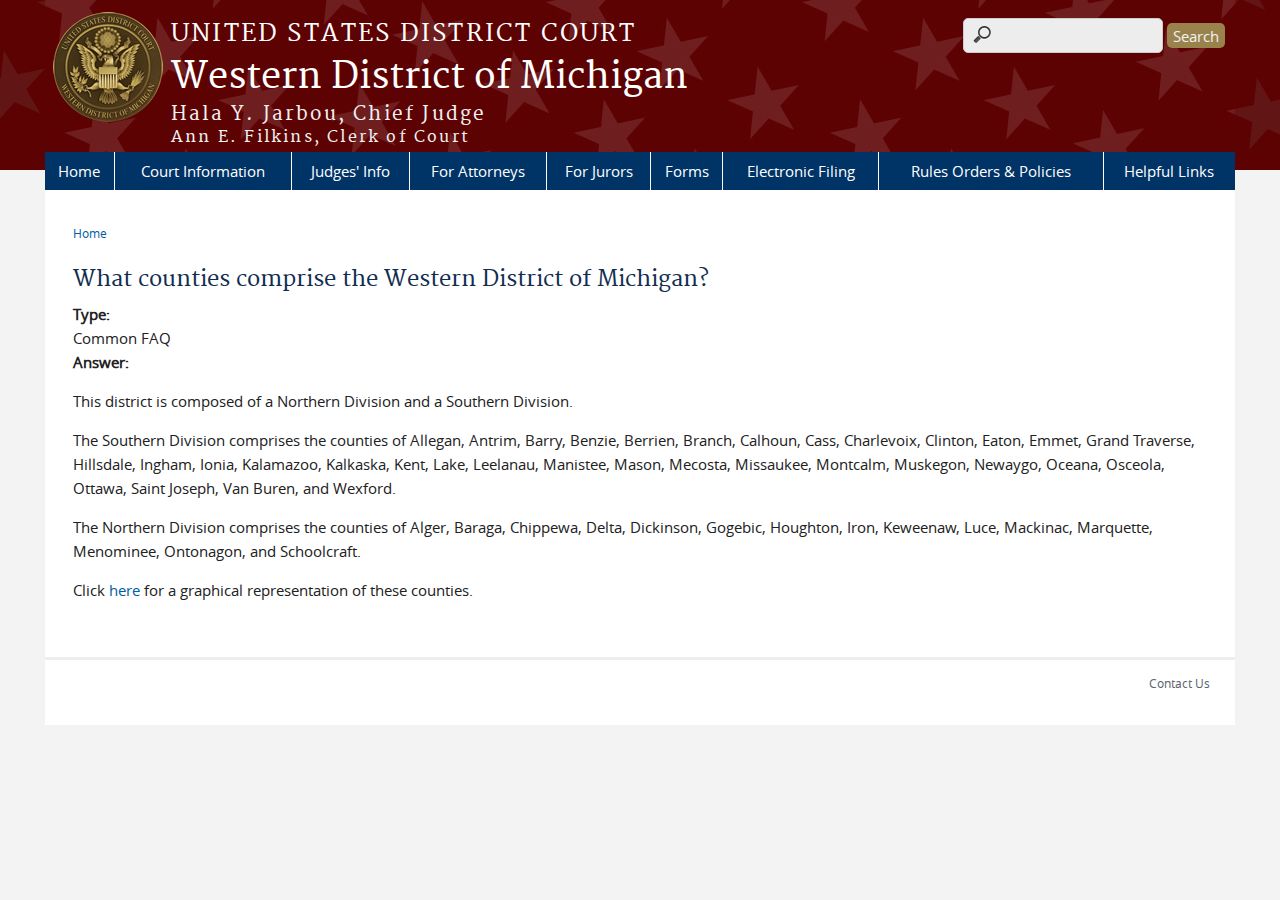
A federal charge, such as a drug or firearms prosecution, is searched through PACER and the federal court system, not the state trial courts that hold local criminal court records.
St. Joseph County Criminal Background Checks
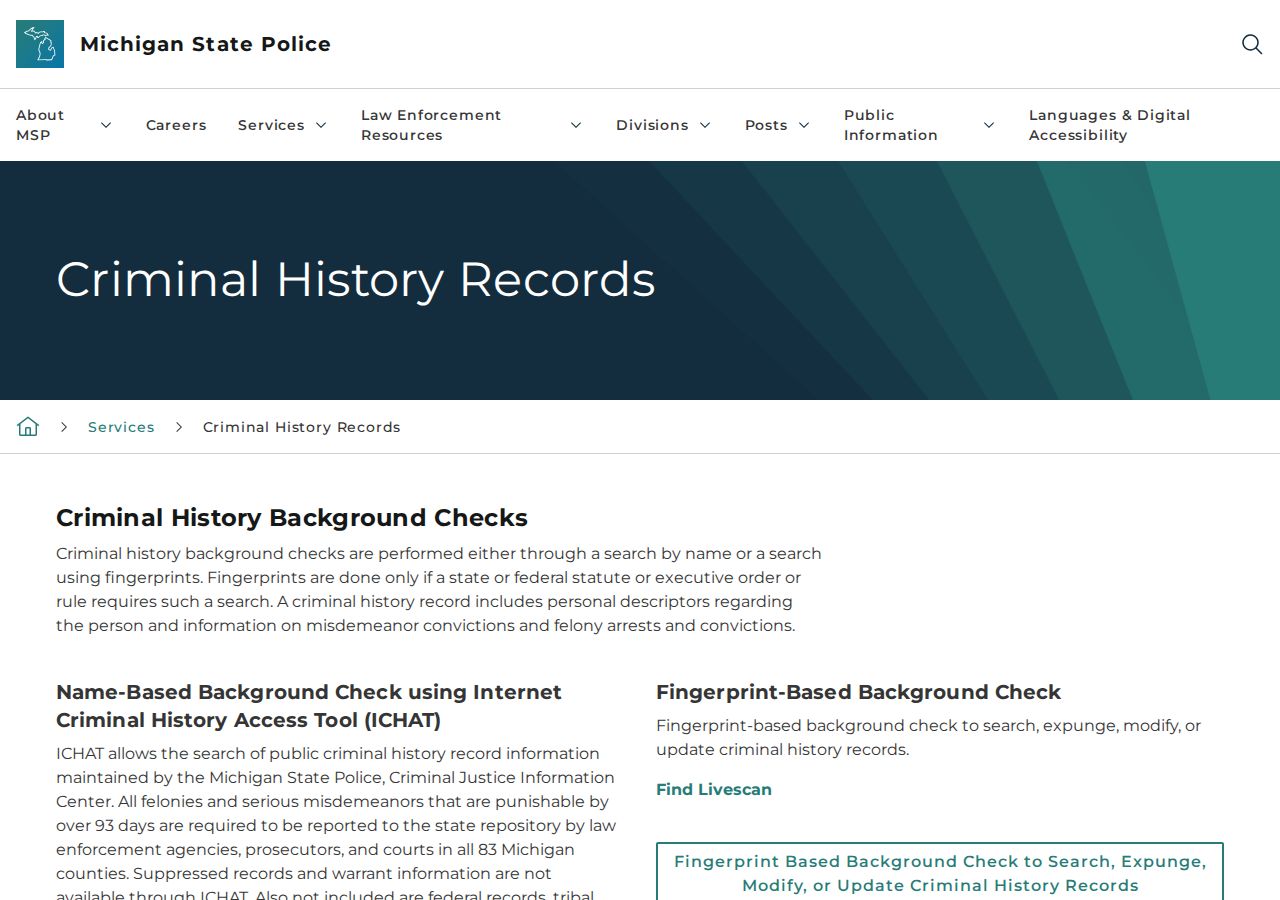
A criminal case search is not the same as a formal background check. For a statewide criminal history, the Michigan State Police run ICHAT, described on the department's criminal history records page. ICHAT reports reportable felonies and serious misdemeanors kept in the state system. It does not return warrant information, and suppressed or nonpublic entries do not appear.
Because ICHAT and online case views each leave gaps, employers and landlords often combine sources and verify older St. Joseph County records with the court directly. A conviction that was set aside will not surface in a routine public check.
Important: This site is a public resource and is not a consumer reporting agency under the Fair Credit Reporting Act, so its records cannot be used for employment or tenant screening.
Restricted Criminal Court Records in St. Joseph County
Not every criminal court record is open. Michigan law and court rules pull several categories out of ordinary public view, and the court will withhold them from a routine search. Reasons range from a defendant's age to protective orders that shield victims and personal data.
- Juvenile records, which are restricted under MCL 712A.28 and reachable only as the law or a court order allows.
- Sealed and set-aside convictions, which drop out of public online viewing under Clean Slate.
- Ongoing matters and certain warrant details, which the court may keep from public view.
- Protected personal information, such as birth dates and account numbers, shielded under MCR 1.109.
When a file is restricted, the record still exists with the court, but access is limited to the parties, their attorneys, and authorized agencies. For older criminal files that predate the county's 2017 online window, a manual check with the clerk remains the surest route.