
What St. Joseph County Arrest Records Show
An arrest record begins with a law enforcement agency, not with a court. It notes who was taken into custody, when, and on what suspected offense. In St. Joseph County that agency is often the Sheriff's Office, a city police department, or the Michigan State Police. The booking side of the event, including current custody status, stays with the jail. The county does not publish an online booking blotter or a mugshot database, so an arrest by itself may leave no public court file at all.
A court charge record works differently. It exists only once the prosecutor authorizes a charge and a complaint reaches a court. The charge, not the arrest, is what a case is built on. A person arrested on a Friday may never be charged. Another person may be charged months later without any arrest at the scene. Custody questions belong with the jail, and the county inmate records page covers that side.
The gap between the two explains a common surprise. A court search can return nothing even though an arrest clearly happened.
From Arrest to Court Charges in St. Joseph County
Most St. Joseph County criminal cases start with a warrant request. Police send a report to the Prosecuting Attorney's Office and ask for charges. The prosecutor reviews police reports, witness statements, records, and the person's prior criminal or traffic history. Only after that review does a charge exist on paper. If the office authorizes a charge, a complaint is filed in the 3B District Court. A magistrate then reviews the complaint, the warrant, and the probable-cause affidavit before it issues.
Every criminal case in the county begins in the District Court, whatever its severity. Misdemeanors can stay there through plea, sentencing, and probation. Felonies pass through arraignment, bond, and a preliminary examination, then move up to the 45th Circuit Court when a judge finds probable cause. Michigan calls that transfer a bindover.
- Police investigate and submit a warrant request to the prosecutor.
- The prosecutor reviews reports, statements, and prior record.
- If charges are authorized, a complaint is filed in the 3B District Court.
- A magistrate reviews the complaint and the probable-cause affidavit.
- The defendant is arraigned, and bond or release conditions are set.
- Felony cases get a preliminary examination and may be bound over to Circuit Court.
Note: A warrant request is not a charge, and a charge is not a conviction, so each step needs its own review before the next one follows.
Who Files Charges in St. Joseph County
The Prosecuting Attorney's Office decides what to charge. The county describes the office as the chief law enforcement official for St. Joseph County. It prosecutes criminal offenses and juvenile delinquency matters. It also handles child abuse and neglect cases and contested mental-health commitment hearings. Michigan counties use the title Prosecuting Attorney rather than District Attorney, so a search for a county DA points back to this same office.
The county's Prosecuting Attorney's Office page sets out that charging role in plain terms.
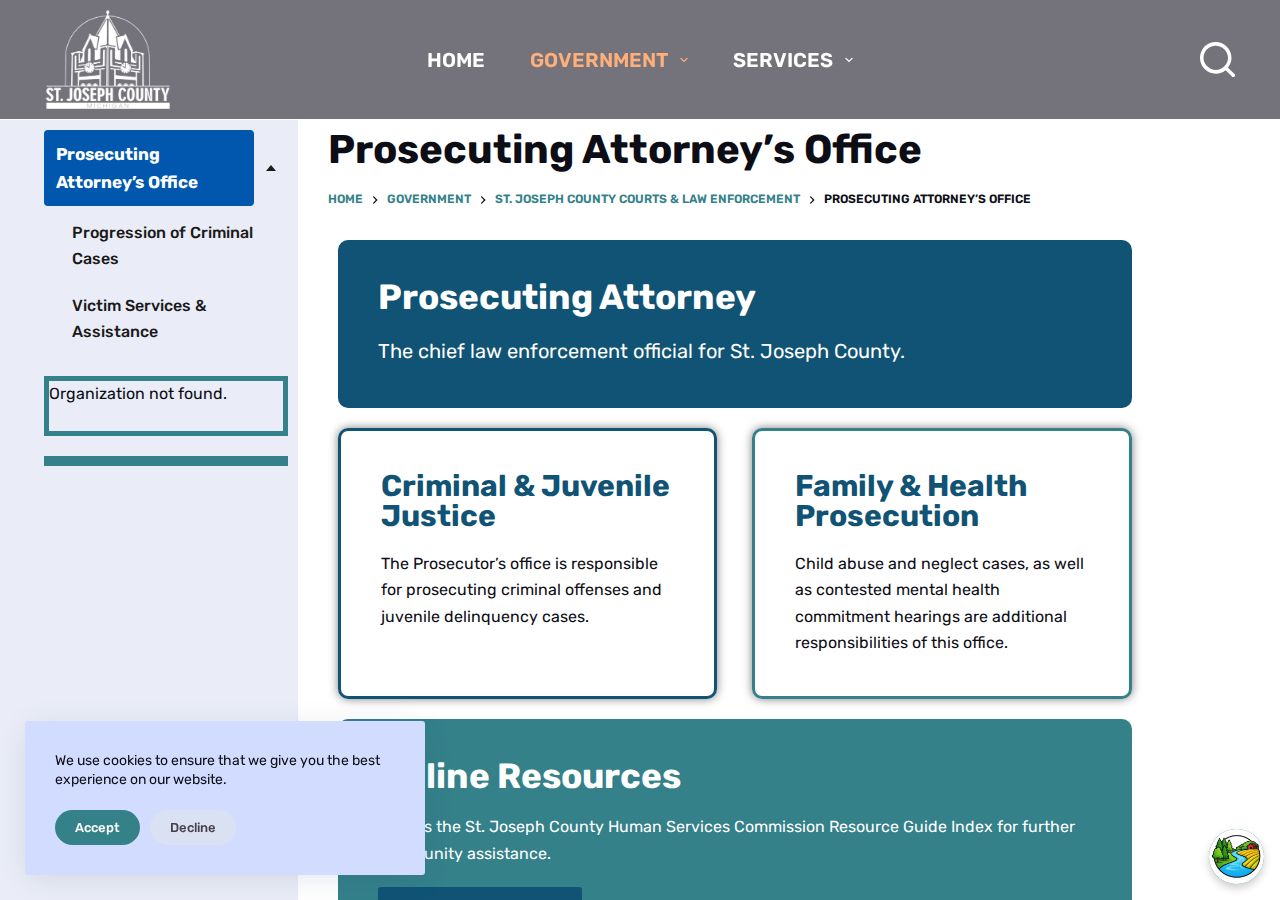
No police officer and no complaining witness can file a criminal charge alone in Michigan. That authority rests with the prosecutor, which is why charge questions go to that office rather than to the arresting agency.
Prosecuting Attorney's Office
Historic Courthouse, First and Second Floors
125 W. Main St.
Centreville, MI 49032
(269) 467-5547
Victim advocates: (269) 467-5546
Charging Documents Behind a Court Charge
A charge reaches a court through a written document. Michigan uses a complaint to open nearly every case, then an information once a felony moves upward. An indictment by grand jury is possible but uncommon at the county level. Each document names the offense, cites the statute, and identifies the accused. Reading the right one tells a searcher where a case currently sits.
| Document | What It Does | Where It Is Filed |
|---|---|---|
| Complaint | Opens the case and states the authorized charge after prosecutor review. | 3B District Court |
| Information | Formally charges a felony after the case is bound over. | 45th Circuit Court |
| Indictment | Charges an offense through a grand jury rather than a complaint. | Circuit Court, uncommon locally |
The complaint travels with a warrant and an affidavit of probable cause. A magistrate weighs that affidavit before signing. If a felony survives the preliminary examination, the prosecutor files the information in Circuit Court.
How a St. Joseph County Charge Changes
Charges rarely stay frozen. A prosecutor may amend a count, reduce a felony to a misdemeanor, or drop a charge outright. A judge may dismiss one after a hearing. Each change is entered in the case file and appears in the register of actions. That is why the charge listed at arraignment can differ sharply from the charge at sentencing.
| Charge Status | What It Means |
|---|---|
| Amended | The prosecutor changed the wording, the count, or the statute cited. |
| Reduced | A higher offense was replaced by a lesser one, often through a plea. |
| Dismissed | A judge ended the charge, with or without prejudice. |
| Nolle Prosequi | The prosecutor chose not to pursue the charge further. |
| Bound Over | Probable cause was found and a felony moved to Circuit Court. |
| Pending | The charge is filed and the case has not reached disposition. |
A dropped charge does not always erase the underlying arrest record held by the arresting agency. The two files age separately.
Charge Versus Conviction in County Records
A charge is an accusation. A conviction is a finding of guilt entered by a court. Confusing the two is the most common error in reading St. Joseph County arrest records and charge records. The distinction matters legally and practically, because a filed charge carries no finding of guilt at all.
| Charge | Conviction | |
|---|---|---|
| Who creates it | The Prosecuting Attorney | The court, after plea or trial |
| Proof required | Probable cause | Guilt beyond a reasonable doubt |
| Can it end early | Yes, by dismissal or nolle prosequi | Only by appeal or a set-aside |
| Shows in ICHAT | Generally no | Yes, when reportable |
The full case file behind any conviction, including pleas, disposition, and sentence, sits in the county criminal court records.
Where St. Joseph County Charge Records Appear
Charge information surfaces in several official places, and none is complete on its own. District Court arraignment entries show the first charge. Circuit Court felony files show the information after bindover. Michigan's ICHAT criminal history service reports convictions, not pending accusations. The state offender system covers people under state supervision, which most charged defendants never enter.
- 3B District Court case grid: open and closed District Court cases with party names and status.
- MiCOURT case search: 45th Circuit Court case history for felonies after bindover.
- Michigan ICHAT: statewide reportable felony and serious misdemeanor convictions.
- Court counter request: the actual complaint, information, and signed orders on paper.
One limit deserves emphasis. Michigan State Police state plainly that warrant information is not available through ICHAT, and suppressed records are withheld as well. A clean ICHAT result therefore does not prove that no charge and no warrant exist. Verification runs through the court that holds the case, or through the Sheriff's Office for anything tied to an active warrant.
Staff names and direct phone numbers for the prosecutor, the clerk, and the courts appear in the county staff directory.
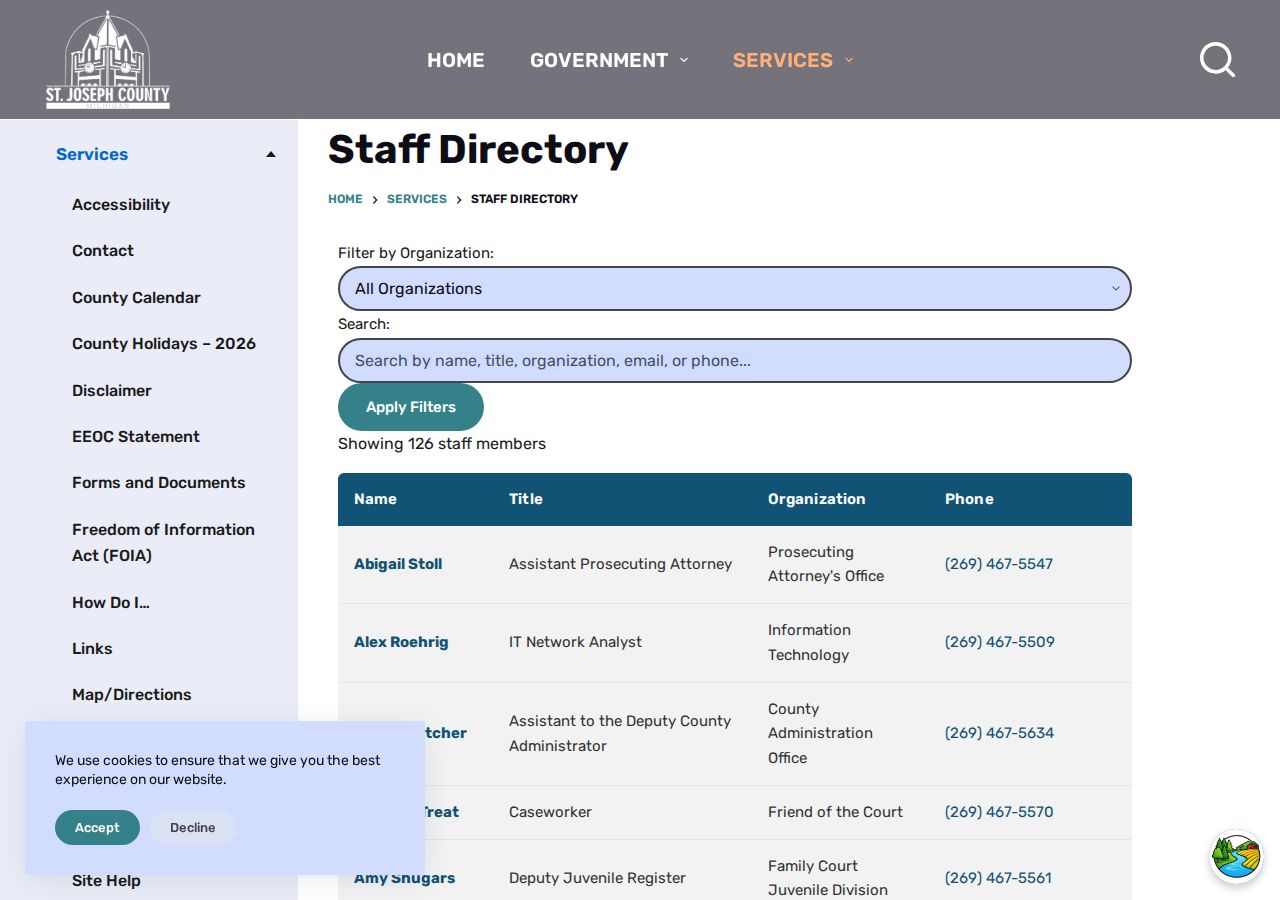
Calling the office that holds a file remains the fastest way to confirm a charge that an online index reports oddly or not at all.
Clean Slate limit: Online criminal viewing in St. Joseph County reflects cases from 2017 to the present. Charge records from earlier years must be verified manually with the court, and the public criminal viewing terminal is currently unavailable.
Restricted Arrest Records and Charge Files
Some charge information never becomes public. Juvenile matters are the clearest example. Michigan restricts juvenile court records, and access turns on statute or a court order rather than an ordinary public request. Confidential social files, diversion records, fingerprints, competency evaluations, and victim information all fall under limited access in the state's nonpublic record chart.
Michigan's juvenile record statute, MCL 712A.28, keeps those files with the court while limiting who may see them.
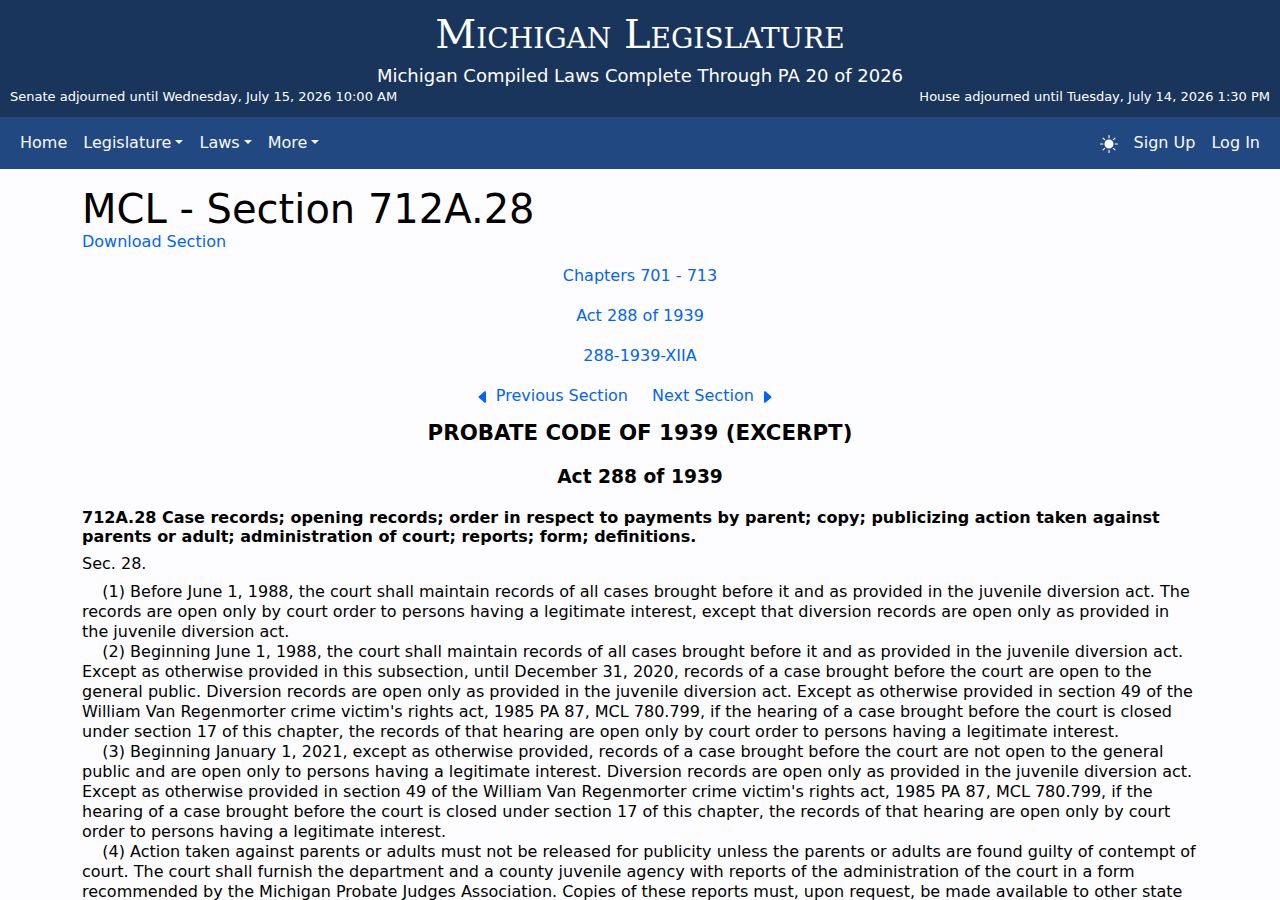
Adult records can close as well. A conviction that is set aside under Michigan's expungement framework leaves ordinary public view, though authorized agencies keep limited access. Personal identifying details such as birth dates and financial account numbers stay shielded in public filings under the court rules. A charge record that appears missing may simply be protected rather than absent.